A care management platform for multiple sclerosis, designed as one system from first prototype to shipped product.
Octave Bioscience set out to change how MS is measured and managed. DesignMap was their design partner for five years, from the first visiontype to a platform in the hands of patients, neurologists, and care teams.
Octave Bioscience began with breakthrough science: a way to measure MS activity objectively. Turning that measurement into better care meant designing a platform no one had built yet.
People with MS live with symptoms that are hard to distinguish from daily life. Neurologists have limited tools, data, and time. Octave wanted a platform that served both, along with the care teams and payers around them. As a startup, they needed to see the whole system before committing to build any one piece of it.
The work began with a visiontype, a single working expression of the future experience.
With Octave's founders, we built personas, storyboards, and system maps across the full landscape of MS care, then designed and prototyped the platform as one coherent product. The visiontype did three jobs at once: it aligned the company on what they were building, it gave investors something real to react to, and it let us validate the direction with the people who would live in it. That validation included research with people with MS and their physicians at the annual meeting of the Consortium of Multiple Sclerosis Centers.
Design's job was the whole system, not a single app.
The platform took shape as connected products: tools for neurologists and their office staff, a patient app, and the service moments that join them, from visit preparation to visit summary. Some of the defining decisions were about restraint. The care cycle reframed the time between office visits as an opportunity to make progress. Notifications reached patients only at moments when they were already thinking about their MS.
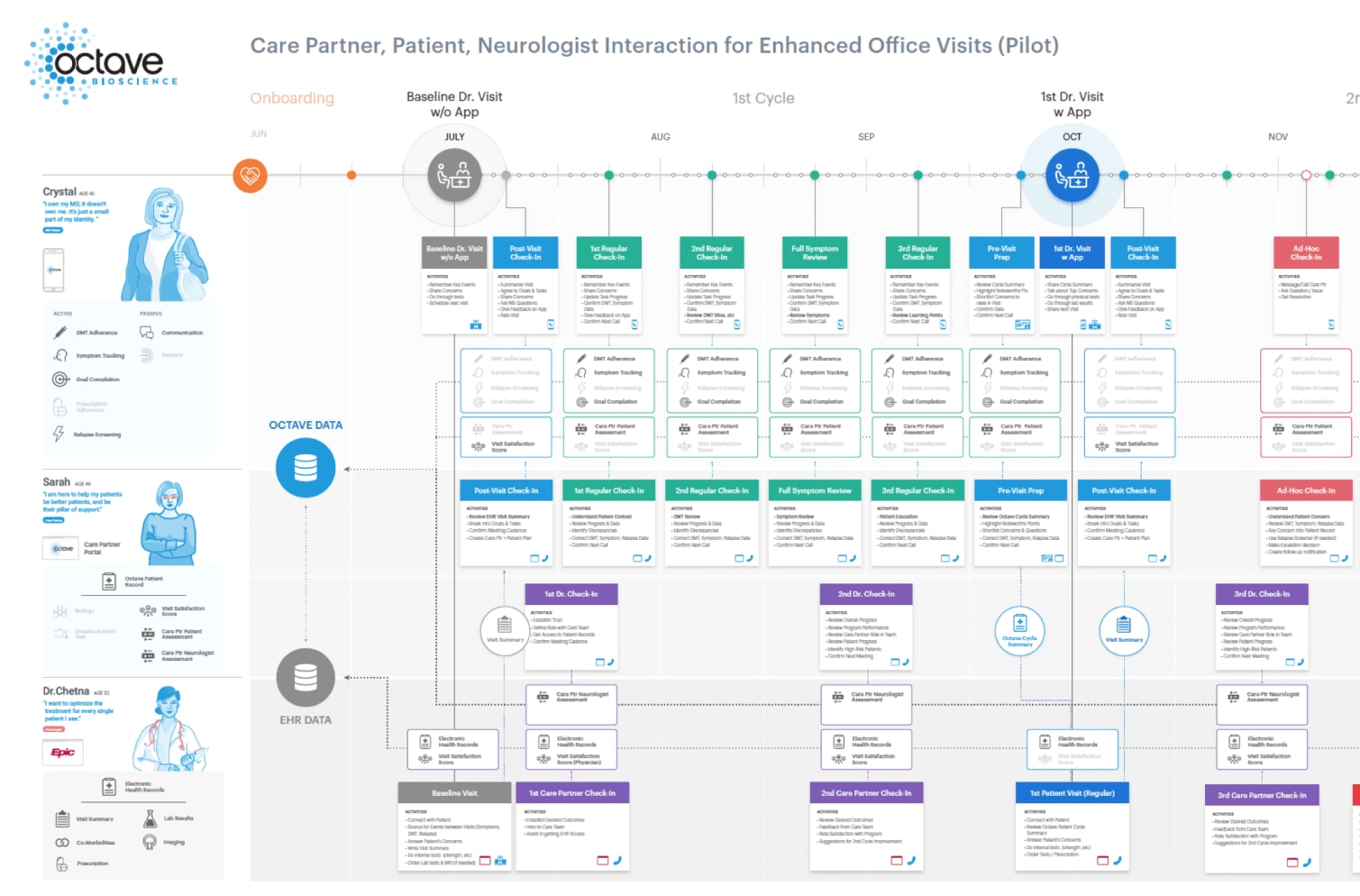
The Octave system map: one picture of patients, clinicians, and the platform connecting them.
One visiontype became five years of shipped product.
From 2017 to 2022, DesignMap teams carried the platform from MVP through alpha and into release after release, quarter by quarter. The work widened as the platform did: research with neurologists, wearable device integration, caregiver engagement, and support for infusion and titration workflows. In the final year we onboarded Octave's first full-time designer, so the design capability stayed in house.
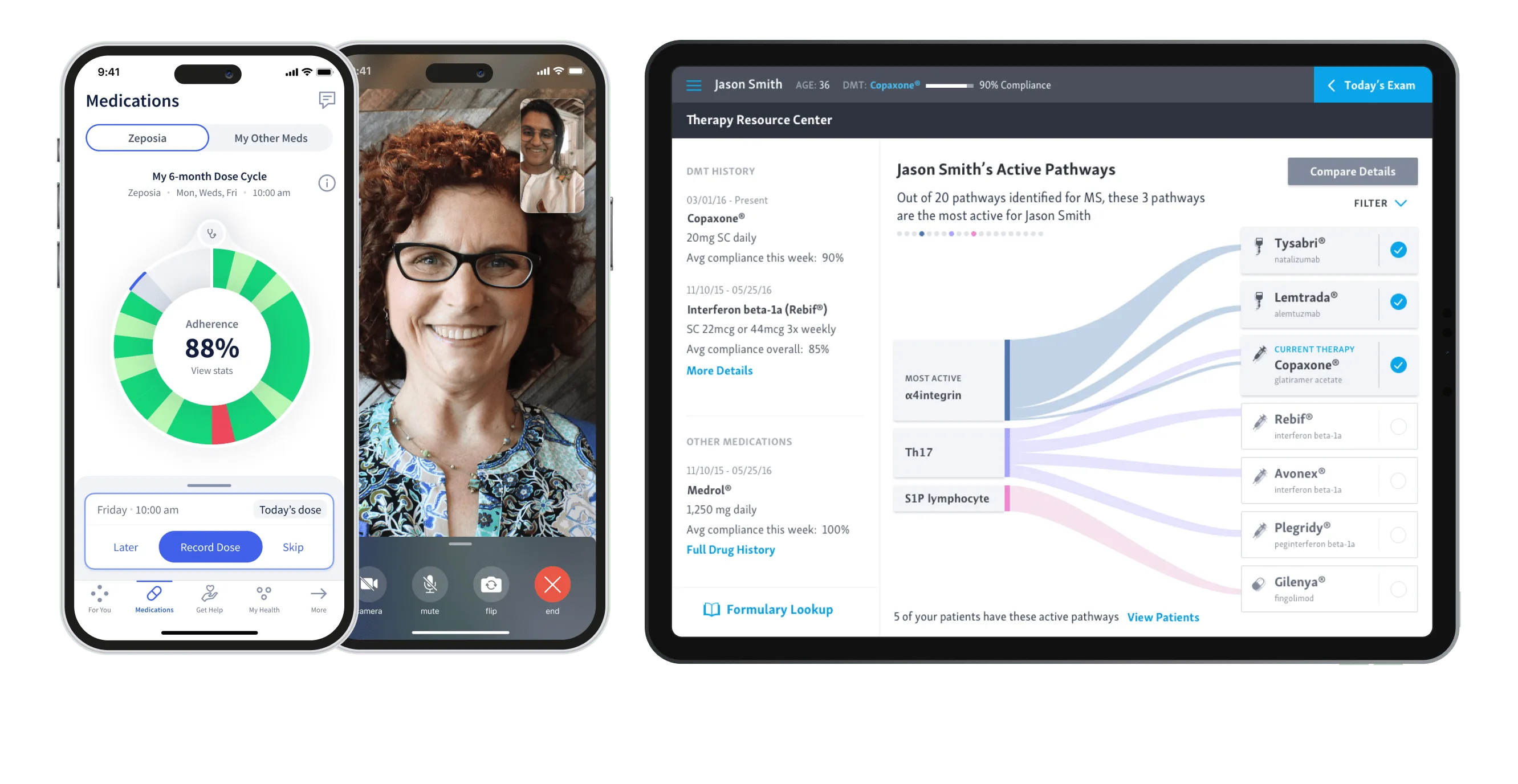
The platform, designed as one product across every screen.
What began as a prototype for alignment became working software for neurologists, care teams, and people with MS. The composite brings the platform's surfaces together in one view.
The Care Insights Platform.
The Care Insights Platform went from visiontype to daily use by people with MS and the teams who care for them. In 2023 the platform won a UX Design Award in the Product category, with the Octave and DesignMap team credited together. In its award entry, Octave reported a 92% engagement rate of at least six months among people with MS.