Area 120 was Google's in-house incubator: small founder teams building experimental products against funding gates. Google brought DesignMap in as the incubator's shared design capability, defining how design worked for every team rather than designing for one.
Google's incubator had dozens of founder teams and no shared way to design.
Area 120 gave small, startup-minded teams room to build experimental products inside Google, each moving fast toward the funding gates that decided what survived. Design arrived team by team, if it arrived at all: no common process, no shared standards, no reliable way for a two-person team to get the design help a decision needed. Google engaged DesignMap to run design for the incubator itself.
The work began with how design would happen, not with a design.
DesignMap built the incubator's design operation: a workflow for teams to request design work, intake to manage it, and an evaluation system to judge what the work produced. The process was written down as documentation for incubation cohorts that had not yet arrived. A team joining Area 120 inherited a way of working on day one.
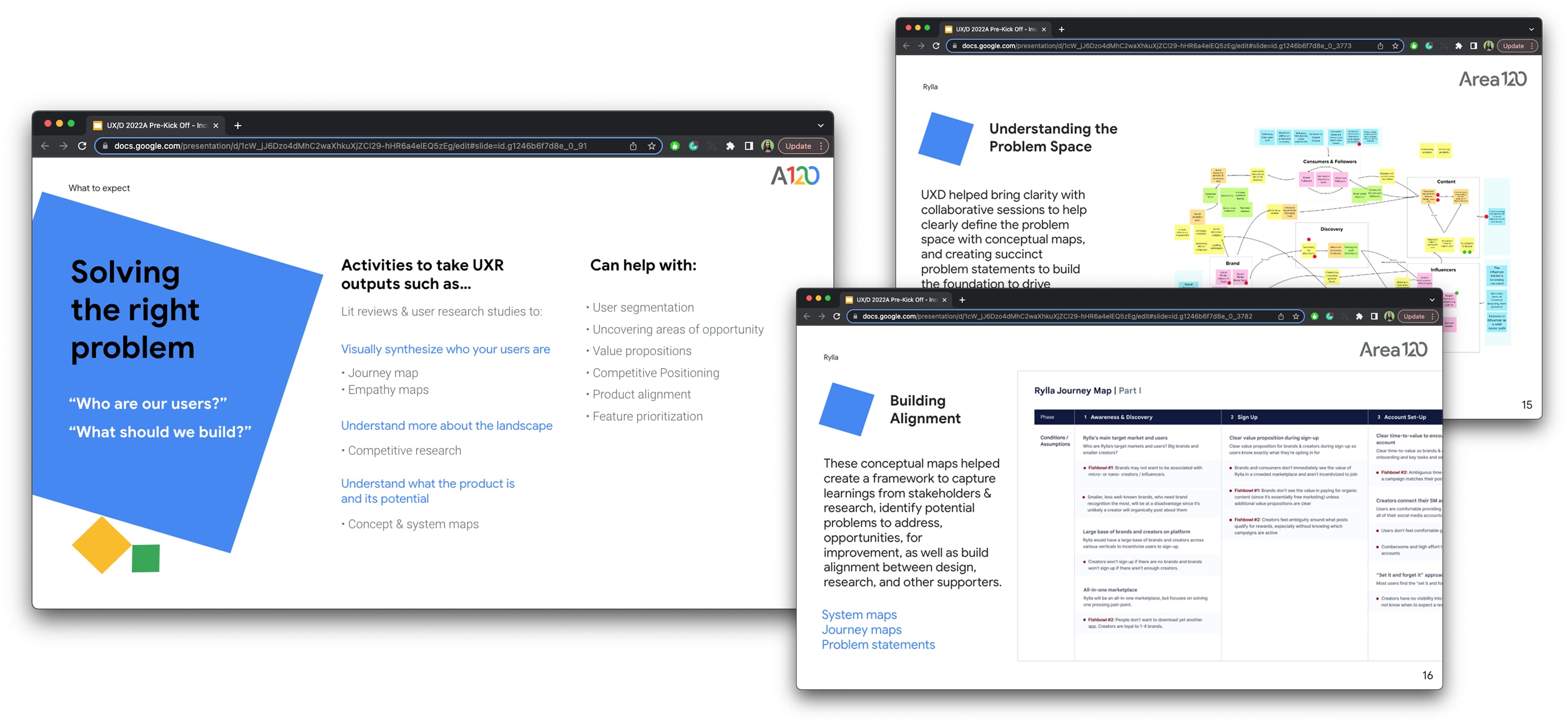
From the process guides that carried the way of working to Area 120 teams.
A capability teams keep is one they are taught.
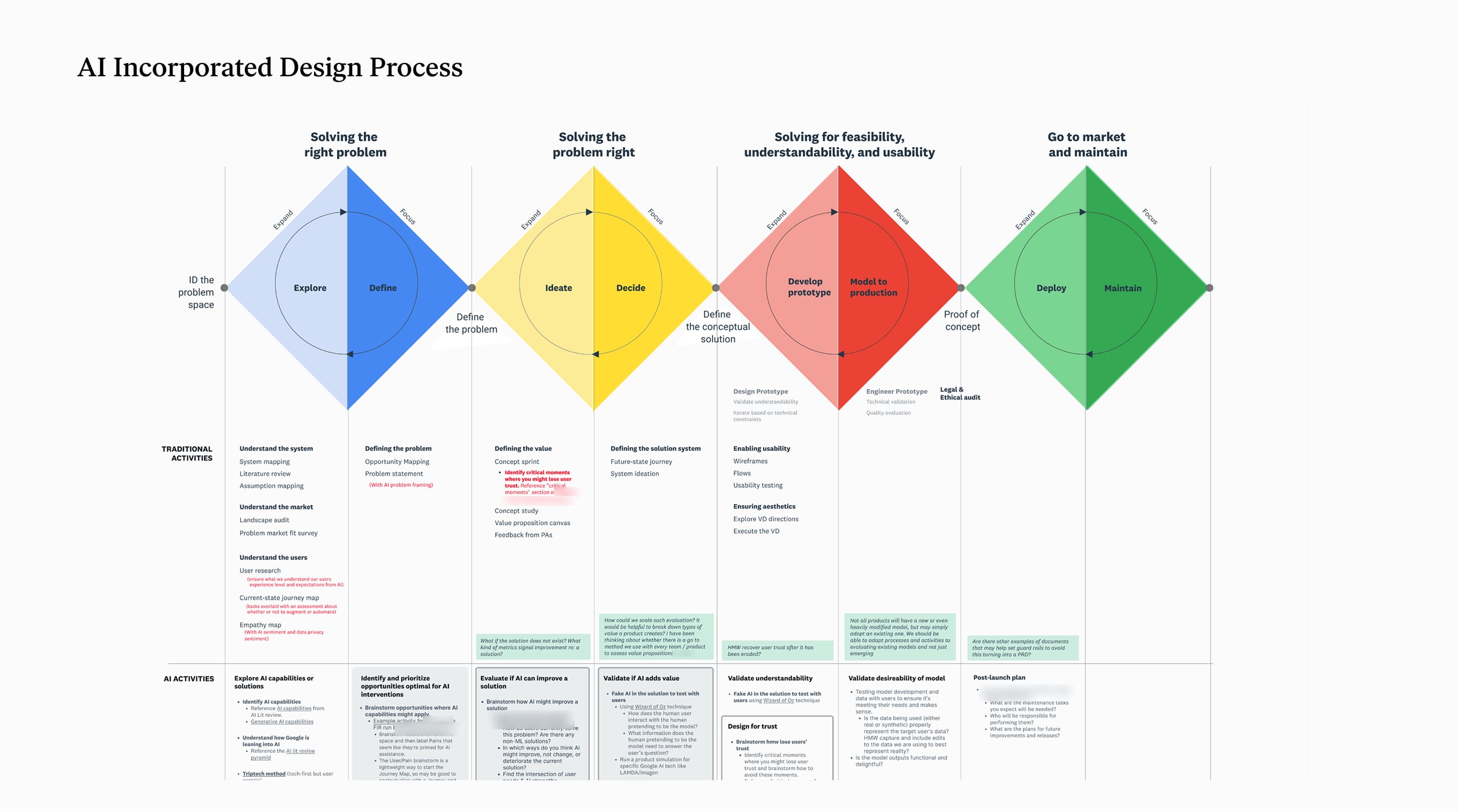
Alongside the system came the teaching: design education for teams and partners across the incubator, training materials and best-practice guides, workshops, and standing office hours. The point was not to turn founders into designers. It was to make design something a small team could ask for well and use with confidence. Much of the portfolio was AI and ML work, and the education covered how to design for it.
A working document mapping opportunities to incorporate AI at each phase of the design process.
The system proved itself in the portfolio.
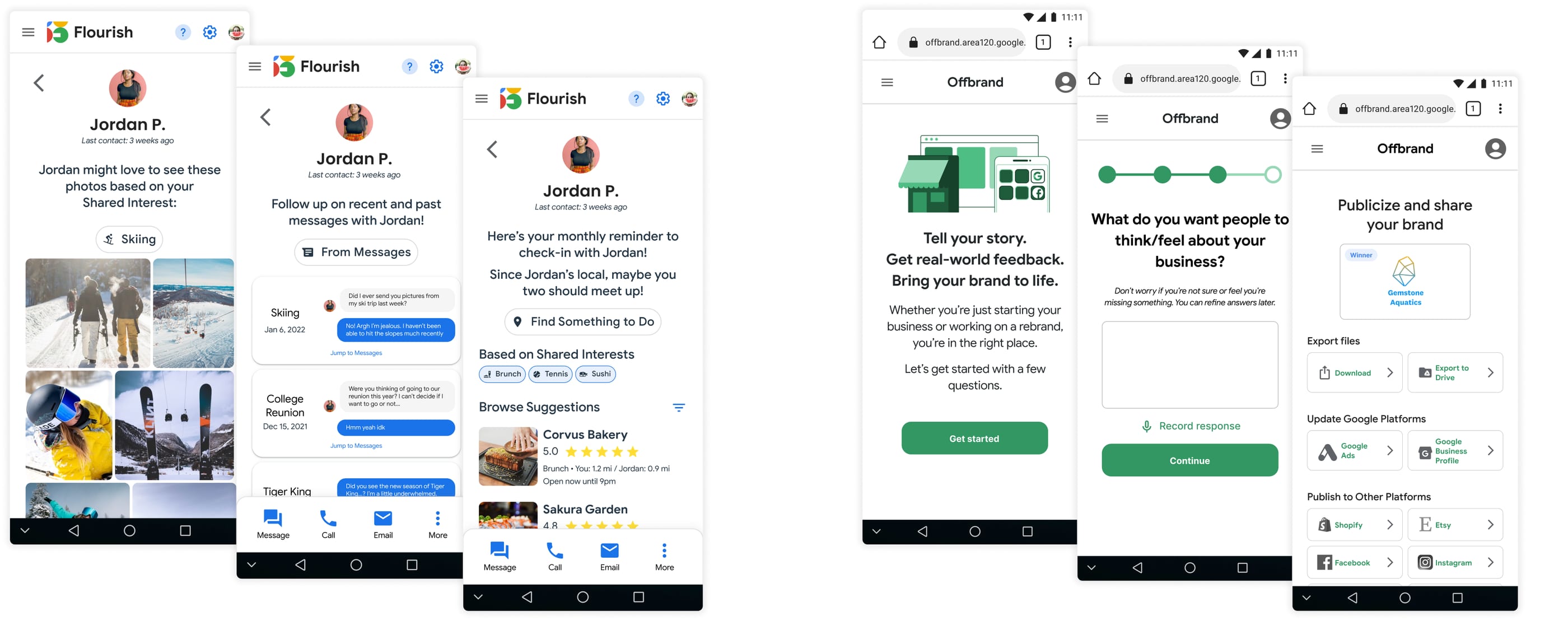
DesignMap designers embedded with founder teams through their sprints: storyboards, concept work, prototypes from rough to high fidelity, and the design requirements their MVPs shipped against. Working with Google's internal research teams to validate concepts with users, the team worked with more than 40 founders and helped carry teams through Area 120's funding gates. Some of what they built launched publicly and joined the Google portfolio.
Concept screens from two portfolio ventures, Offbrand among them.
Some of the portfolio reached far beyond the incubator.
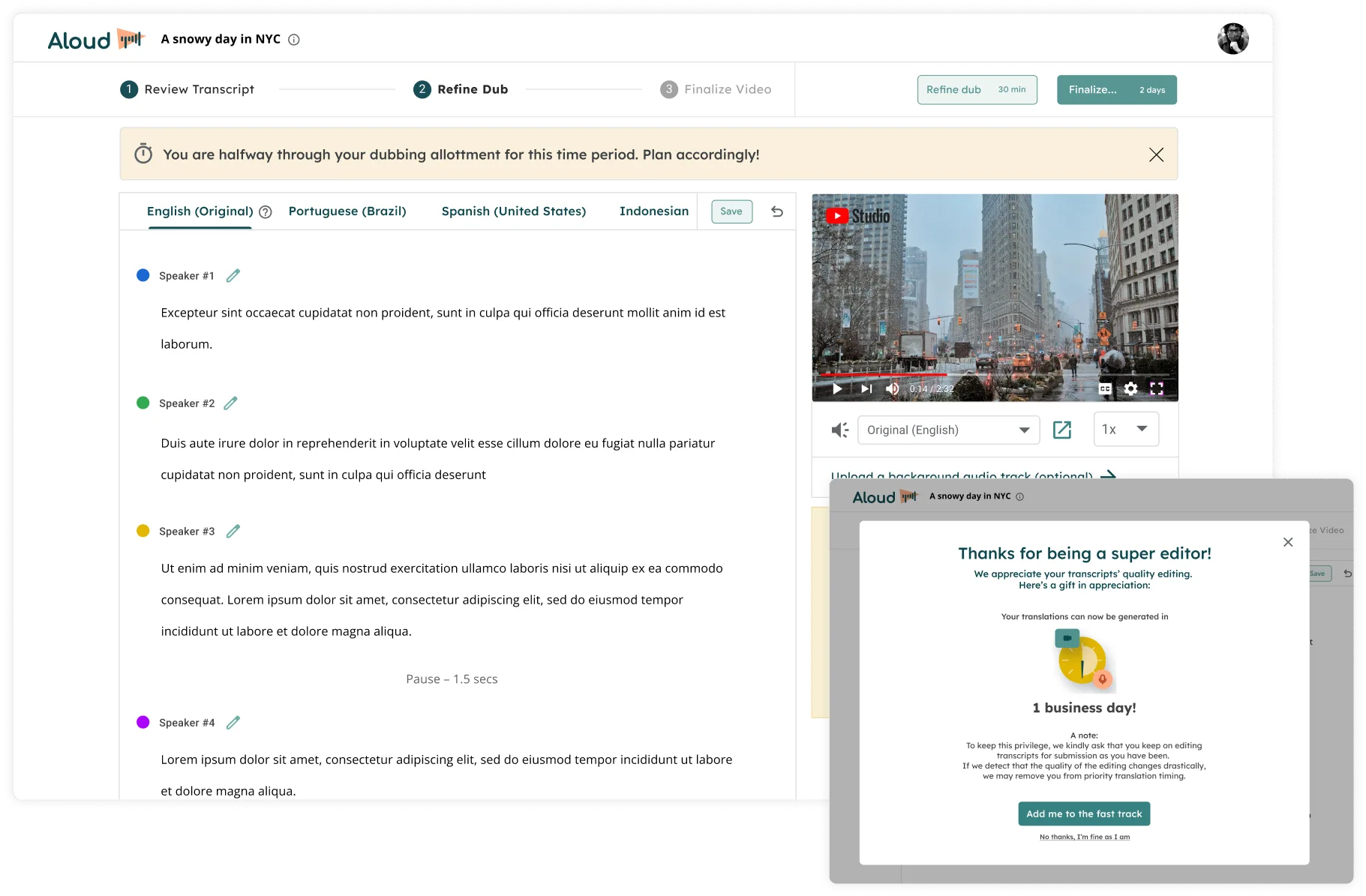
Aloud brought automated dubbing to YouTube, translating creators' videos into new languages. These screens sit on the creator's side of the product: the flow for reviewing a dub before it goes live.
Screens from Aloud, Area 120's automated dubbing tool for YouTube.
From 2020 through 2023, DesignMap worked with more than 40 founders across the Area 120 portfolio. Products designed through the engagement launched publicly, Offbrand and Checks among them, and Checks went on to graduate into Google.