Design Leadership
Building design into Docker.
Docker changed how software ships. From 2014 to 2020, DesignMap helped Docker build design into its teams, its processes, and its products, starting when the company was about twenty people.
Docker changed how software ships. From 2014 to 2020, DesignMap helped Docker build design into its teams, its processes, and its products, starting when the company was about twenty people.
Docker open sourced its container engine in March 2013, and developers adopted it faster than the company could grow. A year later Docker was still about twenty people, with a product surface expanding in every direction.
Growth like that usually costs a company its coherence. Products multiply, teams split, and the experience fragments. Docker wanted design in place before that happened, not repaired after.
Docker decided design would not wait for scale.
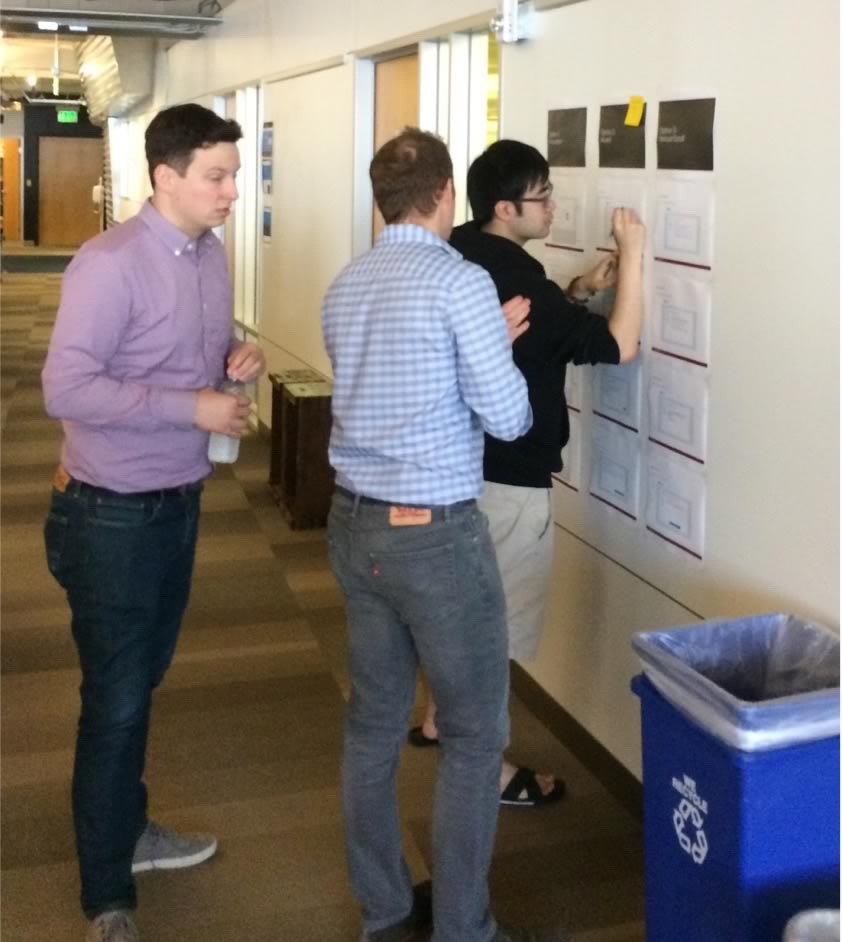
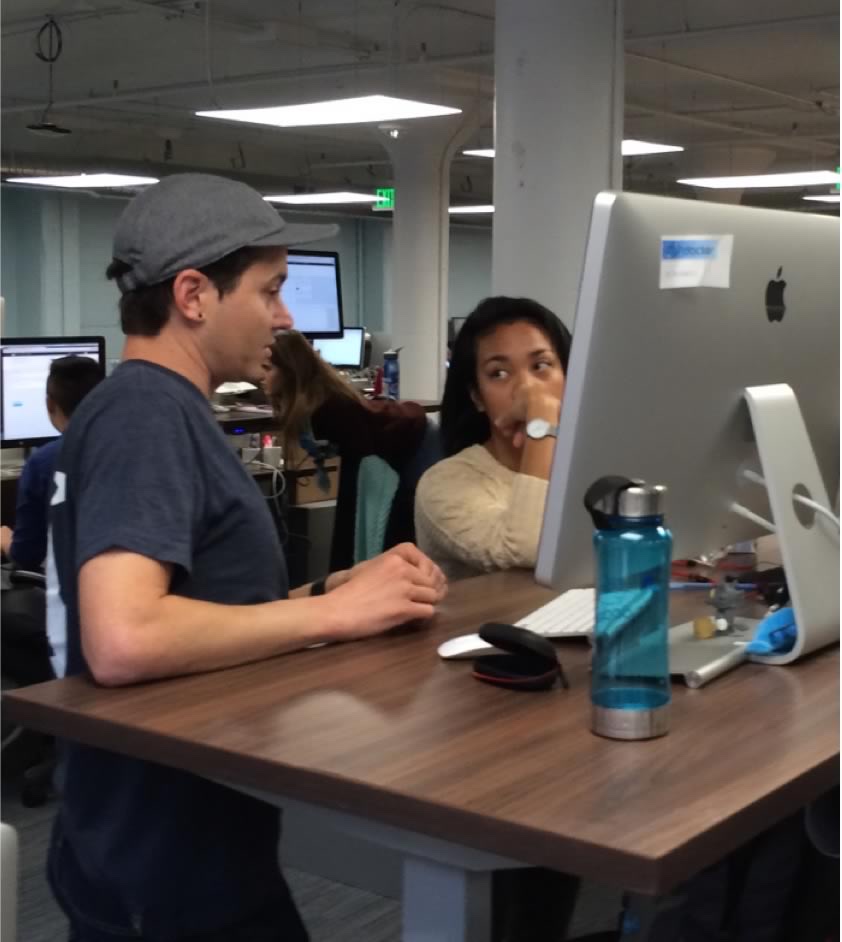
In March 2014, one year after the engine went public, a design leader inside Docker brought DesignMap in. The brief was not a project with edges. It was an alliance: work inside the company, learn how software actually moved from idea to release, and make design part of that movement. For months the work ran on site, in Docker’s rooms, with Docker’s teams.
We started with the org chart, not the interface.
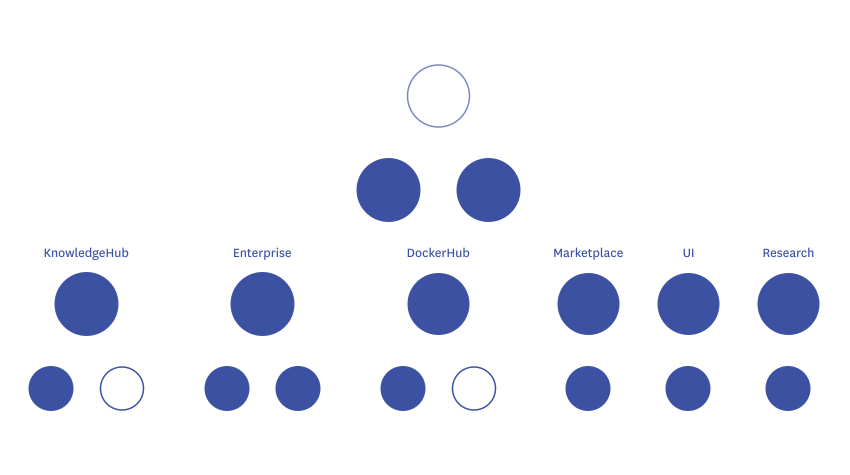
From Docker’s existing team structure we mapped where design had to sit for product decisions to reach it, and identified the product teams that needed designers inside them rather than a service desk beside them. Docker adopted the structure. Design became part of how product development ran, not a stop on its way out the door.
Three months in, Docker Hub shipped.
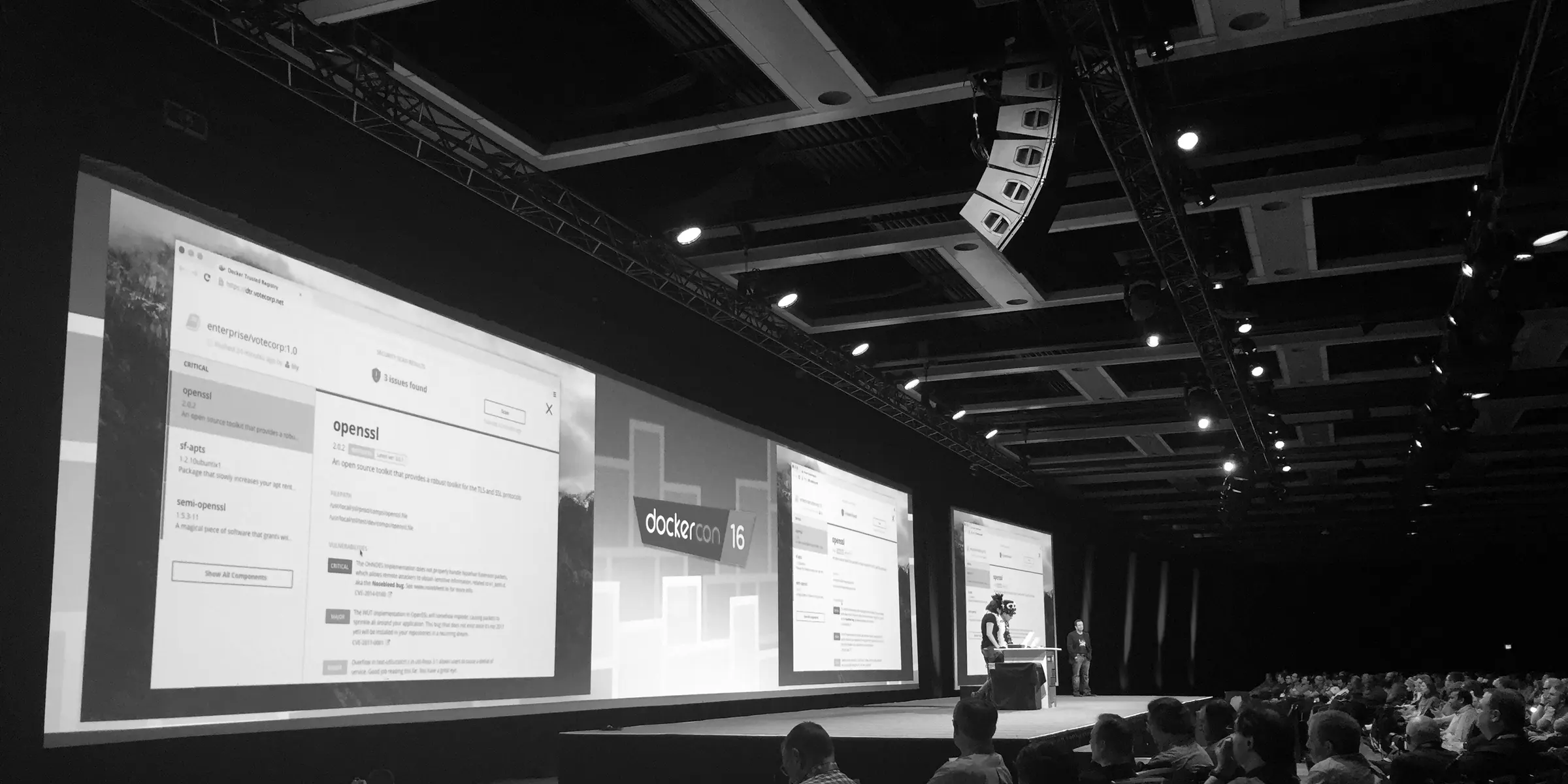
Docker launched Docker Hub alongside Docker 1.0 at the first DockerCon in June 2014. DesignMap researched Docker’s users and shaped the developer experience they met at launch.
When the design lead seat came open, Docker kept it filled.
In late 2015 Docker brought a DesignMap Design Director on site to lead its design team while the company hired a permanent head of design. The role ran the way the permanent one would: setting priorities, giving direction and feedback, meeting weekly with product leadership, and interviewing candidates for the seat they would eventually hand over.
The shipped work.
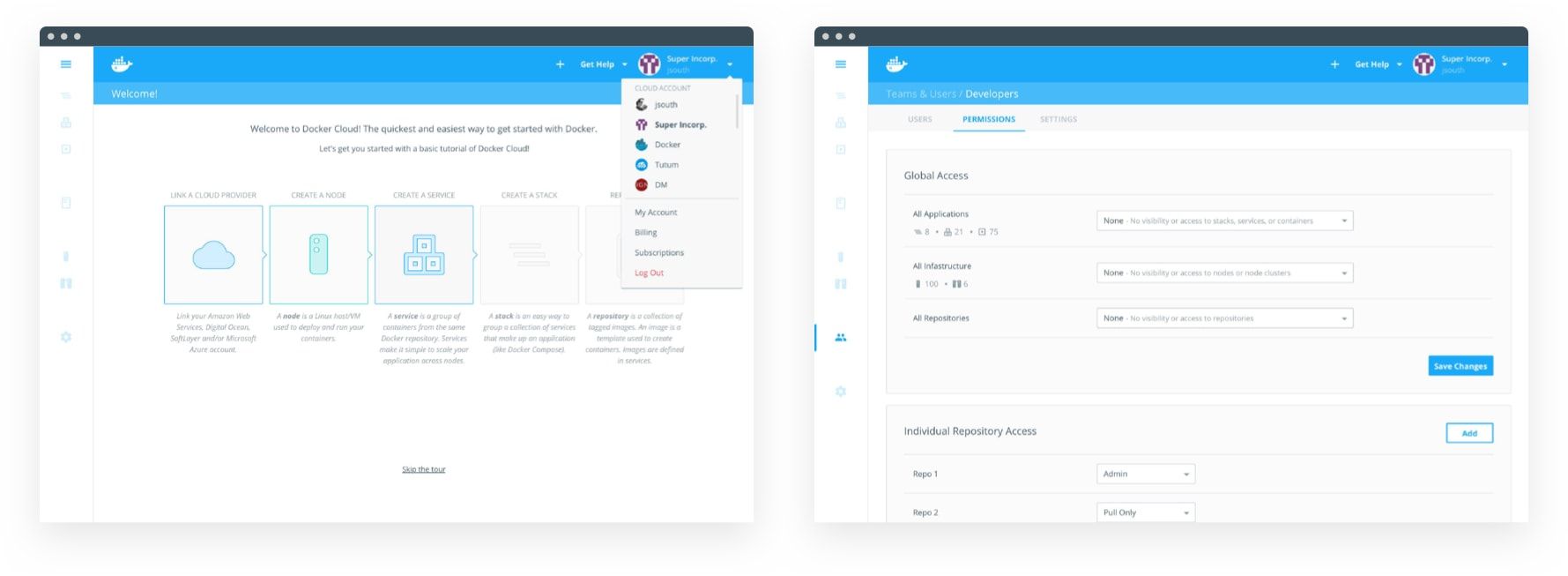
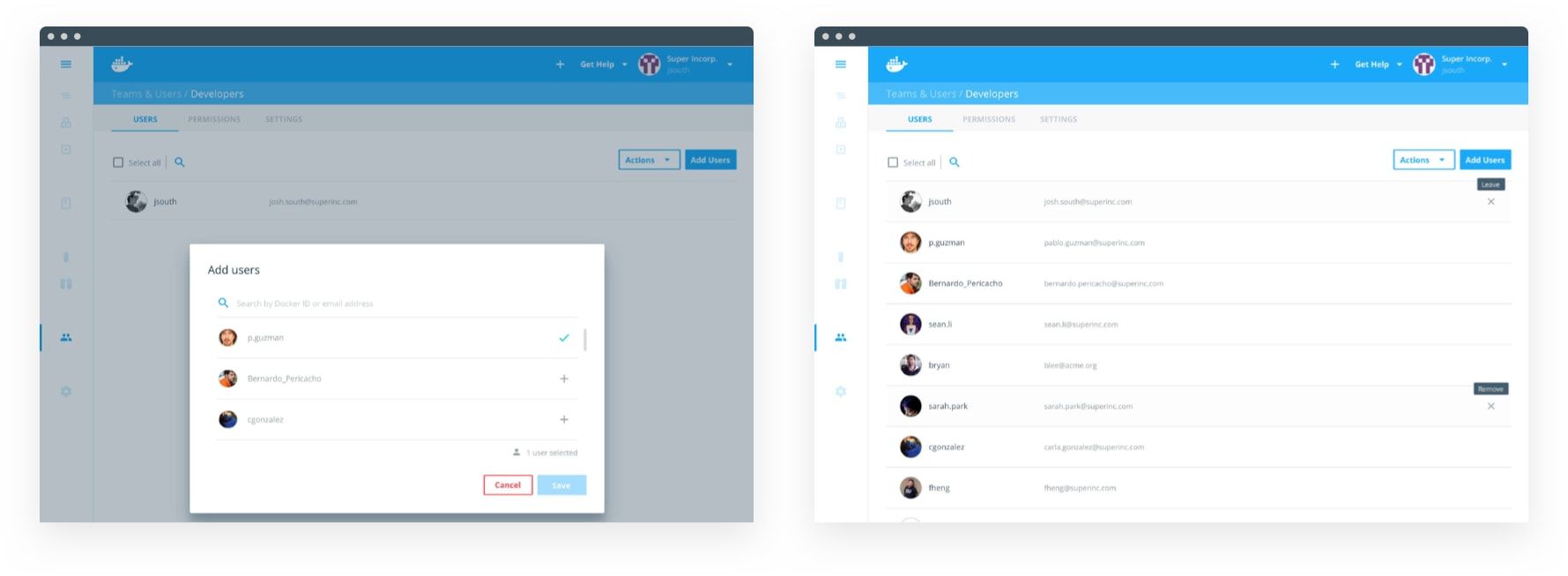
Screens from DesignMap’s product work with Docker: onboarding into cloud infrastructure, service configuration, and the controls behind team and repository access.
Thanks to DesignMap’s efforts in researching our user base to help create a rich developer experience, our initial launch of DockerHub was incredibly successful, well-received, and understood by the audience and the press. And in the first day account registrations jumped literally 5000%.
Scott Johnston, COO, Docker Inc.
The first engagement became a six-year working relationship, from the 2014 restructure through interim leadership and continuing product work into 2020.
Most engagements on this page begin here: your leaders in a room, reaching a decision they will act on. Sometimes it is all you need.
Talk to a partner